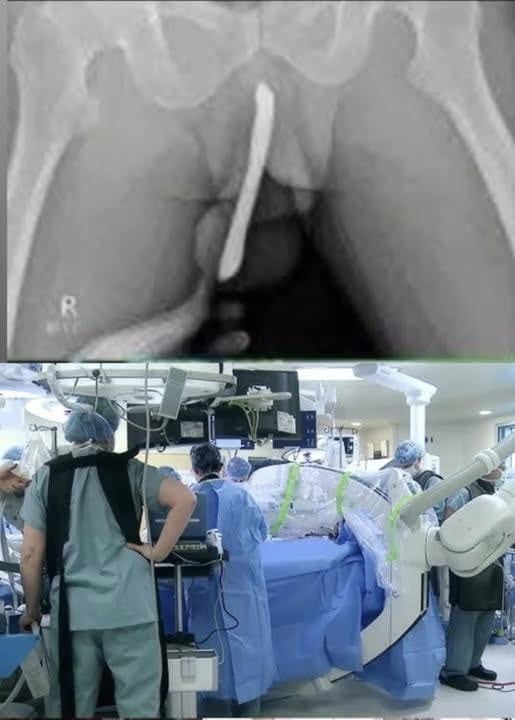
A quiet afternoon turned into a nightmare for a local family when their teenage daughter was rushed to the hospital in critical condition. What began as an ordinary day—sunlight spilling softly through her bedroom window, the hum of traffic outside, the familiar rhythm of home—shifted in a matter of minutes. The young girl, whose identity is being withheld for privacy, was discovered doubled over in pain on her bedroom floor. At first, her parents thought it might be a sudden illness, maybe severe cramps or a stomach virus. But when she began to bleed heavily and struggled to stand upright, panic replaced confusion. Her mother’s voice trembled as she called emergency services, trying to describe what she was seeing while kneeling beside her daughter, who could barely respond.
Paramedics arrived quickly, their movements calm but urgent. Questions filled the room—What happened? Did she fall? Did she take something? The teenager was pale, sweating, and in visible distress. As she was carried out on a stretcher, neighbors watched from doorways, sensing the gravity of the moment without knowing the details. Inside the ambulance, monitors beeped steadily as medical professionals worked to stabilize her. Her father followed behind in the family car, gripping the steering wheel tightly, replaying the afternoon over and over in his mind.
At the hospital, doctors moved swiftly to assess internal injuries and determine the cause of the bleeding. Tests were ordered. IV lines were placed. The waiting room became a space of unbearable silence for her parents, broken only by whispered reassurances that felt fragile and uncertain. Hours seemed to stretch endlessly. Every time the doors swung open, their eyes darted upward, hoping for news that would bring relief.
Later, it was revealed that the girl had attempted to use a personal hygiene item in a way it was not intended to be used, unaware of the serious risks involved. What she may have believed was harmless experimentation resulted in internal trauma that required immediate medical intervention. Doctors emphasized that certain products, while common in households, can become dangerous when misused—particularly when there is a lack of clear education or understanding about bodily health.
Fortunately, after emergency treatment and close monitoring, the teenager was stabilized. Though physically recovering, the emotional shock for the family lingers. They have since spoken privately about the importance of open conversations between parents and children—especially about health, curiosity, and the questions young people may feel too embarrassed to ask. What happened in their home that afternoon was not rooted in rebellion or recklessness, but in silence and misunderstanding.
This frightening ordeal serves as a sobering reminder: education and communication matter. In an age where information is everywhere yet guidance can feel absent, honest dialogue is often the best protection. A single moment of uncertainty turned into a life-threatening situation—but it also opened the door for deeper awareness, compassion, and the realization that no question about health or the body should ever feel too shameful to ask.