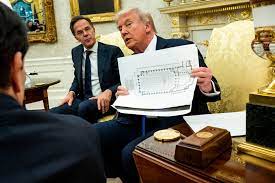
It began like any other Monday morning in Washington — until the sound of roaring machinery broke the calm of Pennsylvania Avenue.
By noon, clouds of white dust were rising over the most famous residence in America. The East Wing of the White House, built in 1902 under Theodore Roosevelt, was being torn to the ground.
What should have been a routine maintenance update quickly turned into a national scandal, leaving historians, preservationists, and citizens across the country stunned.
Because this wasn’t a repair.
This was a demolition — ordered by Donald Trump himself.
A Century of History — Reduced to Rubble
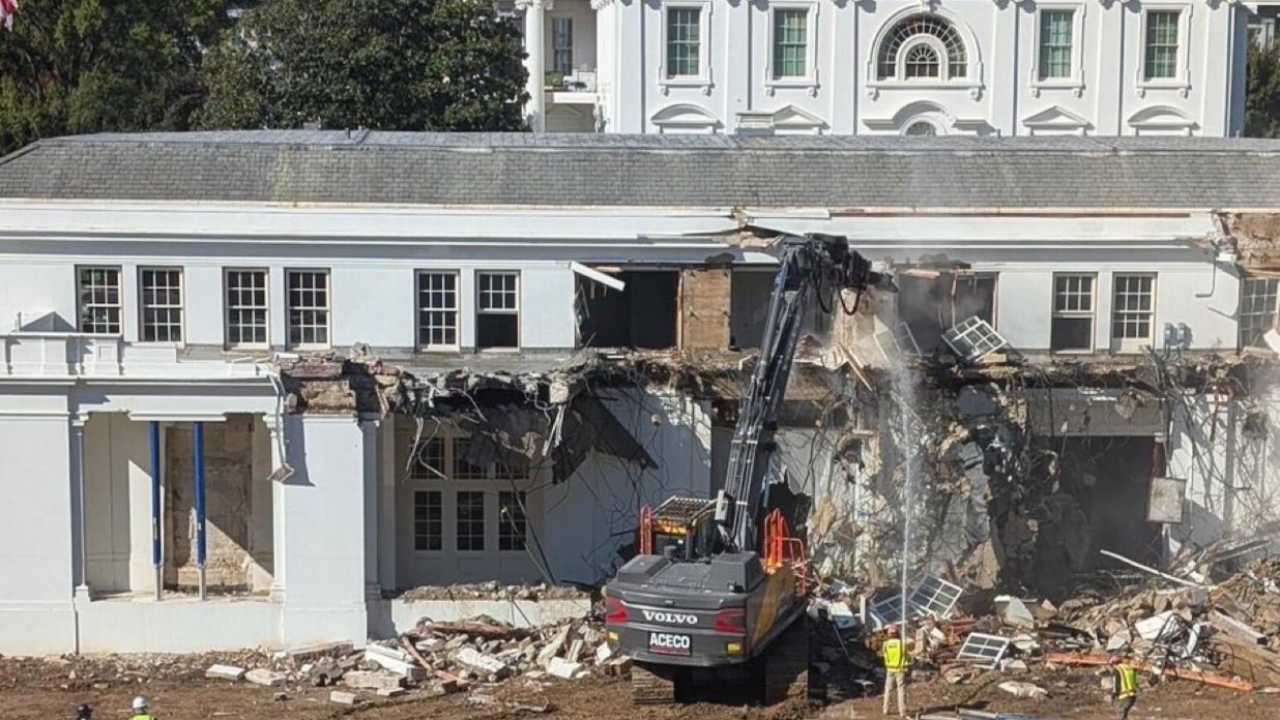
The East Wing has long been more than just a section of the White House. It’s where First Ladies worked, where press events were held, and where generations of Americans entered the “People’s House.”
But as heavy machines clawed through the century-old structure, that heritage vanished before the public’s eyes.
Trump’s justification came swiftly:
“We’re building something new. Something grand. Something that lifts my spirits.”
That “something” is a private ballroom, reportedly 90,000 square feet in size — nearly twice the size of the East Wing itself. Trump called it “a modern monument to American celebration.”
But the demolition of one of the White House’s oldest sections — without public debate, historic review, or congressional approval — has sparked outrage that even Trump’s allies are struggling to contain.
Private Project or Public Scandal?

Standing before reporters later that day, Trump insisted the project was “privately funded” and would cost taxpayers nothing.
“It’s all donations, great people, very successful business leaders — everyone wants to be part of this. It’s going to be beautiful.”
Yet critics argue the secrecy surrounding those “donations” raises serious ethical questions. Reports from The Washington Post and Politico suggest that several corporate donors and defense contractors may have contributed to the project — potentially in exchange for future access or influence.
Legal experts say the president’s claim that this is a private construction doesn’t exempt him from federal preservation laws.
“You can’t bulldoze U.S. history,” said Dr. Elaine Ford, a constitutional historian at Georgetown. “The White House belongs to the American people — not to whoever occupies it.”
Nationwide Outrage and Global Reaction
Within hours of the demolition, #SaveTheEastWing was trending worldwide.
Images of the torn façade and shattered marble arches flooded social media, many showing the remnants of the East Wing theater where presidents once held private screenings.
Former First Lady Jill Biden released a short but poignant statement:
“That building held memories of every family who lived there. To destroy it is to erase a piece of our national heart.”
In London, The Guardian called it “the most reckless act of presidential vanity since Nixon’s day.”
CNN’s headline read bluntly: “Trump Tears Down History.”
Even many of Trump’s supporters appeared divided — some praising his boldness, others quietly questioning his motives.
Congress Demands Answers
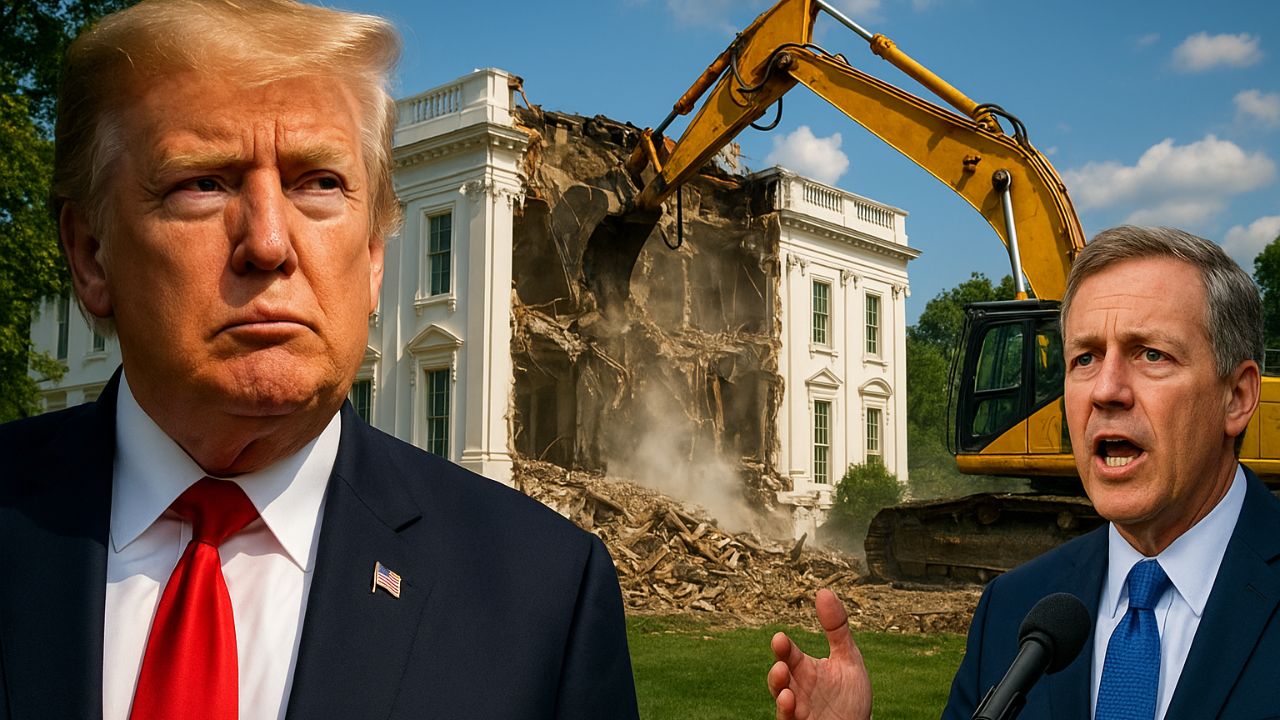
By Tuesday morning, congressional committees were already drafting resolutions demanding a full investigation.
Senator Elizabeth Warren accused Trump of “privatizing patriotism,” while moderate Republicans like Susan Collins expressed alarm over the lack of oversight.
Trump, in characteristic style, dismissed the criticism as “ridiculous political theater,” insisting that “nobody cared about that old wing anyway.”
When pressed about the 1902 structure’s cultural significance, he replied with a smirk:
“We’ll build something even better. People love new things. History can be improved.”
Those words struck many Americans as symbolic of something deeper — a disregard for shared memory, for the continuity that binds past and present.
A Symbol of Something Bigger
For many Americans, especially older generations, the White House isn’t just a building. It’s a living timeline — a constant thread through wars, peace, triumph, and tragedy.
Watching a piece of it fall under a president’s own command felt like watching the past itself collapse.
“It’s not about politics,” said retired teacher Martha Jennings, 68. “It’s about respect. You don’t rebuild your legacy by erasing others’.”
Architectural historian Samuel Hargrove described the act more starkly:
“Imagine tearing out a page from your family Bible because you think the print looks old. That’s what happened today.”
The Aftermath: What Comes Next
As of this week, demolition debris has been cleared and construction crews are preparing the foundation for the new Trump Ballroom, a marble-and-gold structure expected to open in 2027.
Lawsuits are already being filed to challenge the legality of the demolition. Preservation societies have vowed to fight for memorialization of the East Wing’s legacy — even in absence of the building itself.
Meanwhile, Trump remains unmoved.
“America deserves beauty,” he said during a press gaggle on Wednesday. “And I’m giving it to them — big, beautiful, better than ever before.”
But for millions who watched that wing crumble, beauty is not what they saw.
They saw loss — of history, humility, and a connection to something that once made the presidency feel bigger than the man who held it.